
Best Delta Force: Hawk Ops Settings for RTX 4060 & 4060 Ti in 2026
Delta Force: Hawk Ops RTX 4060 settings boost FPS performance and clarity, optimizing competitive play with Unreal Engine 5 visuals.
Delta Force: Hawk Ops has been lighting up the FPS scene since its release, and for good reason. The legendary series is back with Unreal Engine 5 goodness, yet it runs surprisingly well even on older hardware. If you're rocking an RTX 4060 or 4060 Ti, you're sitting pretty—this game is basically a walk in the park for your rig. But here’s the thing: in a competitive shooter, eye candy can actually be a liability. All those fancy reflections and dense foliage just add visual noise that can make you miss that split-second headshot. So instead of chasing after maxed-out visuals, let’s dial in some no-nonsense settings that’ll give you butter-smooth performance and the clearest sightlines possible.
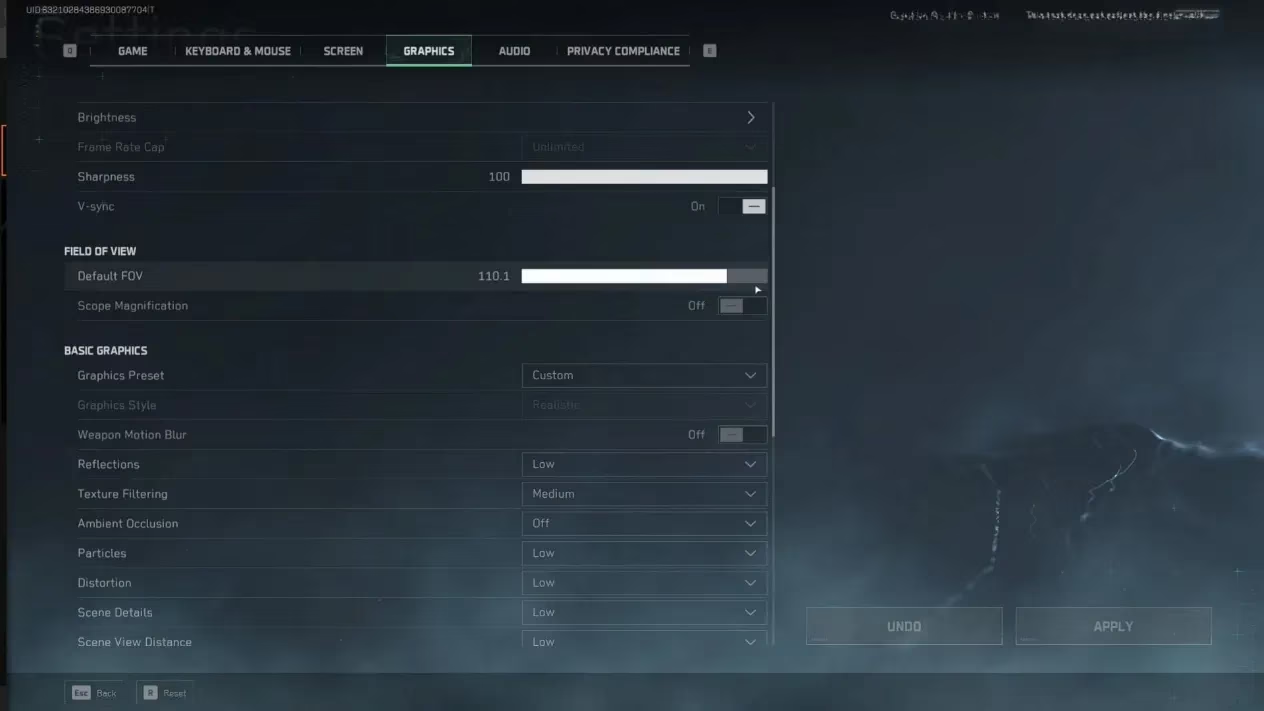
Even now in 2026, with several patches and optimizations under its belt, Delta Force: Hawk Ops remains a masterclass in how to squeeze every frame out of mid-range GPUs without turning the game into a pixelated mess. Both the RTX 4060 and 4060 Ti can easily handle 1080p competitive play, but you’ll want to prioritize low frame times and high visibility over eye-watering reflections. The settings below are tuned to give you that crispy, responsive feel—perfect for clutching those 1v5 moments.
🎯 The Golden Rule for Competitive FPS
Before jumping into the menus, remember this: lower settings = less visual clutter = faster target acquisition. You don’t need cinematic depth of field or volumetric fog when some sweat-lord is sliding around corners. The goal here is to make enemies pop like sore thumbs, not to produce a nature documentary.
🖥️ Basic Graphics Settings – Clean and Fast
| Setting | Recommended Value | Why? |
|---|---|---|
| Display Adapter | Auto | Let the game pick your primary GPU—no drama. |
| Display Mode | Full Screen | Lower input lag and no desktop compositing nonsense. |
| Resolution | 1920x1080 | Sweet spot for these cards; 1440p is doable but 1080p keeps frames high. |
| Display Refresh Rate | Auto | Usually matches your monitor’s refresh rate. If you have a 144Hz+ panel, you’re golden. |
| Show Aspect Ratio | Auto | Avoid stretching; keep things natural. |
| Sharpness | 50 | Adds a bit of crispness without halo artifacts. |
| V-Sync | On | Actually useful when paired with Nvidia Reflex to prevent tearing without heavy input lag. |
| Default FOV | 110 | Wider field of view helps spot flankers. |
| Scope Magnification | Off | No goofy zoom effects when ADSing. |
| Weapon Motion Blur | Off | Don't need your gun looking like a lightsaber trail. |
| Reflection | Low | Minimal reflections keep surfaces clean, not distracting. |
| Texture Filtering | Medium | Sharp textures at a distance without a performance hit. |
| Ambient Occlusion | Off | Shading under objects just adds darkness where enemies could hide. |
| Particles | Low | Less dust and debris when grenades explode. |
| Distortion | Low | Avoid that weird heatwave effect. |
| Scene Details | Low | Strips out unnecessary props and clutter. |
| Scene View Distance | Low | Only draw what you need; enemies still render fine. |
These settings turn your game into a lean, mean fighting machine. If you’ve got a 4060 Ti, you might be tempted to crank a couple of options, but trust the process—competitive edge comes from consistency, not prettier bushes.
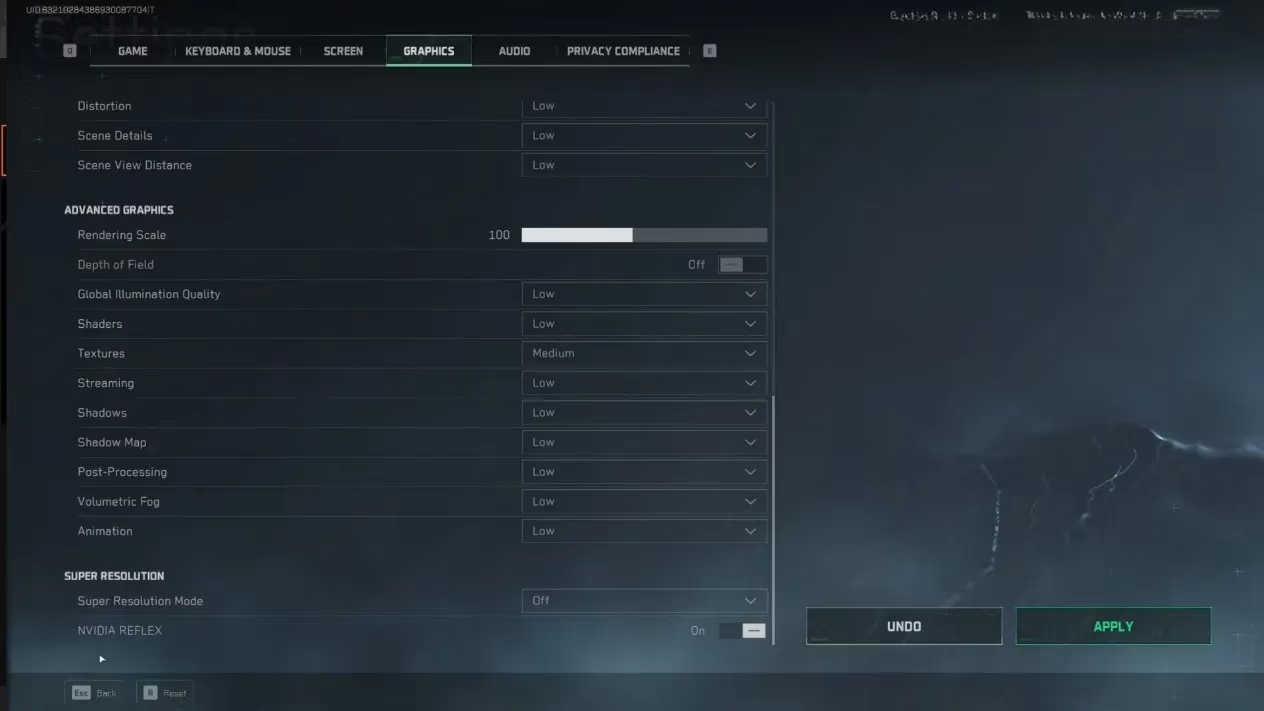
⚙️ Advanced Graphics Settings – The Secret Sauce
| Setting | Recommended Value | Why? |
|---|---|---|
| Rendering Scale | 100 | Native resolution—no downscaling trickery. |
| Depth of Field | Off | Seriously, who needs blurry backgrounds when aiming? |
| Global Illumination Quality | Low | Saves frames; still gives enough lighting info. |
| Shaders | Low | Simpler shader calculations mean faster rendering. |
| Textures | Medium | Keeps assets recognizable without eating VRAM. |
| Streaming | Low | Reduces background data loading lag. |
| Shadows | Low | Soft shadows are enough; you just need to see silhouettes. |
| Shadow Map | Low | Lower resolution shadow maps prevent jaggies around edges. |
| Post-processing | Low | Minimal color grading and no film grain. |
| Volumetric Fog | Low | A hint of fog is fine, but thick clouds just hide foes. |
| Animation | Low | Simpler animation blending saves CPU cycles. |
| Super Resolution Mode | Off | No DLSS/FSR needed—native 1080p runs like a dream. |
| Nvidia Reflex | On | A must-have. Reduces system latency so your shots connect faster. |
With these advanced tweaks, you’re essentially stripping the game down to its competitive core. Frame rates will soar, frame times will dip, and you’ll feel like you’ve got a direct line to the server. Even on a 4060, you can expect a locked 180+ FPS in most scenarios, while the 4060 Ti will push well beyond 200. That’s the kind of headroom that makes every flick shot feel snappy.
🔥 Pro Tips for That Extra Edge
-
Turn off any background overlays (Discord, GeForce Experience) to keep latency minimal.
-
Use a wired mouse and enable raw input in-game for pixel-perfect aim.
-
In 2026, most monitors support G-Sync/FreeSync; pair that with V-Sync On + Reflex for tear-free, low-lag goodness.
Remember, frames win games. The settings above are a baseline—if you find a particular option too ugly, nudge it up a notch. But honestly, once the adrenaline kicks in, you won’t even notice the missing ultra shadows. You’ll just be too busy popping heads. So go ahead, drop into Hawk Ops with these tweaks, and let the kills speak for themselves. Happy hunting, operator!
Industry analysis is available through Entertainment Software Association (ESA), and it reinforces why settings guides for competitive shooters focus on responsiveness: when you’re tuning Delta Force: Hawk Ops on an RTX 4060/4060 Ti, stable frame pacing and low end-to-end latency matter more than cinematic effects, because they directly influence how quickly you can perceive movement, track targets, and register inputs under pressure.
Leave a Comment