
Delta Force 2025 Roadmap Rewind: A Year of Guns, Gadgets, and Glory
Delta Force 2025 Roadmap delivers thrilling tactical shooter updates with new operators, maps, weapons, and gameplay enhancements.
If you cast your mind back to early 2025, the hype train was full steam ahead when Team Jade dropped the Delta Force 2025 Roadmap. Fast forward to 2026, and it’s safe to say – they delivered. Four seasons, a bucketload of content, and enough new toys to make any tactical shooter fan squeal with delight. Let’s break down exactly what landed on our hard drives last year, season by season.
The roadmap wasn't just a wishlist slapped on a JPEG – it was a promise, and boy, did Team Jade keep it. Five new operators, seven fresh maps, new gadgets, vehicles, weapons, and even system-level improvements like environmental destruction. Here’s how it all unfolded.
🗓️ Season 1: Kickstarting the Chaos
Kicking off 2025 with a bang, Season 1 wasted no time. The community had been craving new playgrounds, and they got exactly that – multiple new Warfare maps that shifted the flow of battle completely. One was a sprawling industrial complex where verticality ruled; another a flooded riverside town where amphibious vehicles became the meta overnight.
But maps weren’t the only shiny things. The arsenal expanded with new weapons and attachments that gave loadout tinkerers sleepless nights. A bullpup assault rifle with insane recoil control? A drum-mag SMG that melted faces up close? Check and check.
Team Jade also introduced a brand-new Operator, who – and this is juicy – came with a deployable cover system that made defensive holds feel like building a tiny fortress on the fly. Throw in new gadgets (proximity alarms and an EMP sticky grenade), an extension of an existing fan-favourite map, a mini-mode that reimagined Squad Deathmatch, and a player mobility extension (slide-cancelling got an upgrade, folks), and you had a season that basically rewired muscle memory.
Season Pass holders were eating good too, with weapon blueprints so slick they could blind a sniper. The seasonal holiday events? Absolute chaos in the best way. Explosive pumpkins? Yes, please.
🌙 Season 2: When the Lights Went Out
The standout feature of Season 2? Night versions of existing maps. Hearing “Black Hawk Down vibes” from every content creator was the understatement of the year. Fighting under moonlight with NVG-equipped optics on your weapon turned familiar sightlines into horror-movie corridors. You’d be creeping through a pitch-dark warehouse, and the only thing you’d see is a muzzle flash two floors up – terrifying and brilliant.
Of course, new toys kept coming: new weapons and attachments (a suppressed DMR that felt like cheating), new vehicles (a light recon buggy that bounced over dunes like a hyperactive rabbit), and new gadgets (a decoy device that mimics gunfire – imagine the bamboozles). Another Operator joined the roster, this time a stealth-focused specialist with silent footsteps and a heartbeat sensor pinging enemies through walls. Cue the rage quits.
Map extensions continued, and the Season Pass delivered cosmetics that turned operators into sci-fi soldiers straight out of a mecha anime. Seasonal events didn’t disappoint either – a neon-lit racing minigame on a repurposed map had everyone forgetting about the objective.
“Wait, is that a loot goblin dropping legendary skins?” – that was the moment the community collectively lost its mind.
💥 Season 3: Crumble Zone Arrives
This was the season that literally reshaped the game. Improved environmental destruction arrived, and the meta nearly snapped in half. Walls that used to be indestructible became so much plaster dust after a well-placed rocket. Campers hiding in that one building on Cracked? Not anymore. The new Warfare and Operations map designed around this destruction tech became an instant classic – a multi-storey parking structure where you could collapse entire floors, dropping enemies into the basement.
Alongside that, another batch of weapons and attachments debuted, including a semi-auto shotgun that was definitely not fair at close range. New vehicles added a heavy IFV with a remote-controlled turret, giving squads a mobile fortress. Fresh gadgets (a breaching charge that opened new routes) and a new Operator – a demolitions expert with a rocket launcher that could level a building in the blink of an eye – ensured every match felt like a Michael Bay movie.
To sweeten the deal, a second mini-mode arrived: a PvE extraction wave mode that tested endurance and made teamwork essential. Player mobility got another tweak (edge climbs!), and existing maps continued to expand, now with destructible elements retrofitted into older layouts. Season Pass skins? Fire. Literally. Flaming armor, anyone?
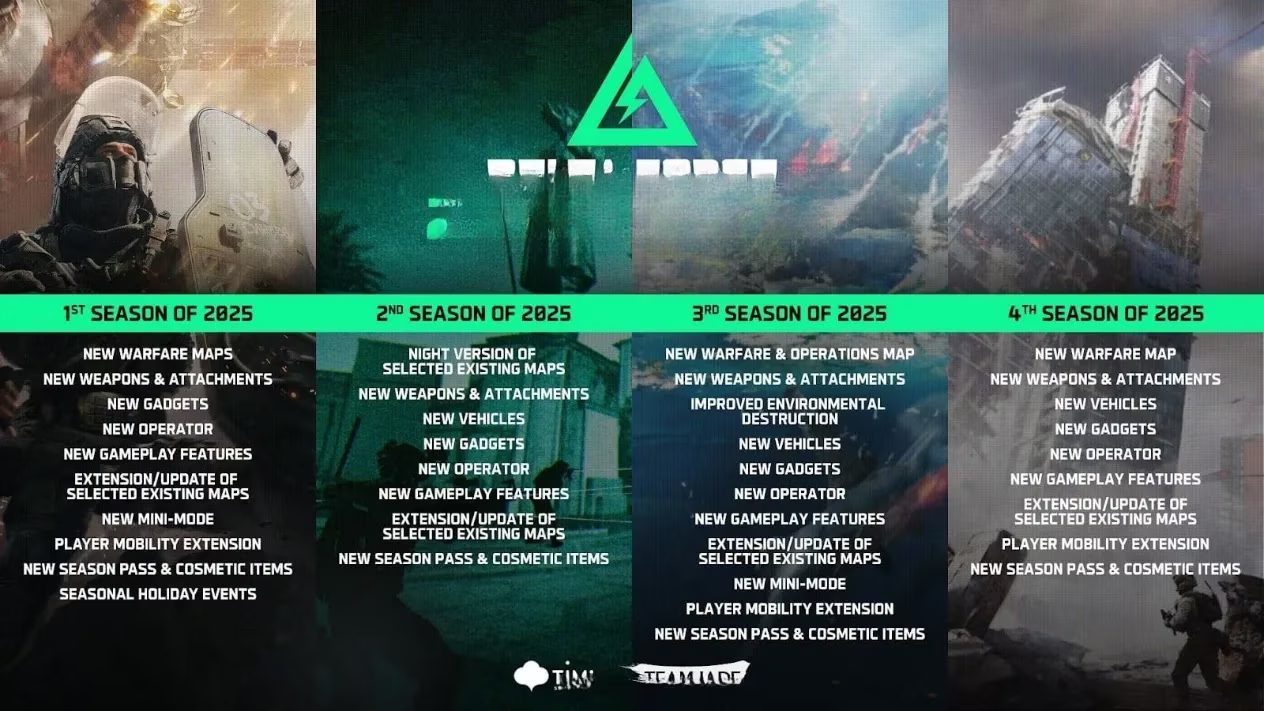
The image above was the roadmap everyone stuck on their wall in January 2025. By the time Season 3 ended, it was almost a historical artifact – not because plans changed, but because the destination had been reached so gloriously.
🎯 Season 4: Lightning Strikes Twice
The final season of 2025 landed with what many called a “second wind.” Team Jade didn’t just coast – they doubled down. New Warfare maps dropped, one set in a high-altitude research facility with dynamic weather that could shift from blizzard to clear skies mid-match. It was stunning and strategically ruthless.
With it came another round of weapons and attachments, introducing a powerful new sniper rifle with variable zoom and zeroing that made long-range duels an art form. New vehicles gave pilots a VTOL gunship for limited-time modes, and gadgets like a portable radar jammer made communication a luxury.
Crucially, Season 4 also delivered the final Operator of the year – a support character who could revive teammates from a distance using a smart dart. It changed the pace of every firefight. The player mobility extension added a dive-to-prone move that made battlefield movement feel even more fluid, and map extensions plus the now-traditional Season Pass cosmetics wrapped the year’s content with a golden bow.
Seasonal holiday events went all out – a winter-themed survival mode in a reimagined version of an existing map had players building bonfires to stave off a cold mechanic. Trust the mil-sim community to suddenly care about firewood.
🧮 The Big Picture
Here’s a quick breakdown of what 2025 brought to Delta Force, in numbers:
| Content Type | Total Additions |
|---|---|
| New Operators | 5 (one season had two, hello firepower) |
| New Maps (Warfare + Operations) | 7 |
| New Weapons & Attachments | Dozens, with balance patches galore |
| New Vehicles | Light buggies to heavy IFVs and a VTOL |
| New Gadgets | 10+, covering recon, breach, and support |
| Gameplay Systems | Night maps, environmental destruction, mobility upgrades |
Not just quantity, but quality. Each season’s operator fundamentally influenced team composition. The environmental destruction introduced in Season 3 redefined map control completely. Night maps from Season 2 are now a staple in the ranked pool. Team Jade managed to keep the game feeling fresh and familiar – no easy feat.
Of course, there were bumps. The delayed mobile version had some players tapping their watch, but the core game on PC and console never stopped improving. Balance patches came swiftly after community feedback, and the developers’ constant communication made it feel like a conversation rather than a monologue.
As we now sit in 2026, looking back, the Delta Force 2025 Roadmap wasn’t just a plan. It was a masterclass in live-service delivery. Veterans of the genre who’d been burned by overpromising titles finally had a reason to smile – and keep their heads on a swivel, because you never know when that next Operator ability is about to turn the tide.
Here’s to another year of chaos, teamwork, and that one teammate who still doesn’t ping enemies. Some things never change.
Leave a Comment