
Delta Force Black Hawk Down: A Brutal Campaign That Rewards Patience
The Delta Force: Black Hawk Down remake campaign is punishing, demanding tactical four-player co-op, scarce ammo, and zero checkpoints.
Delta Force: Black Hawk Down is not a typical modern shooter campaign. Based on the 22-year-old classic from 2003, this remake arrived on Feb. 21, 2025, as the third major pillar of the Delta Force experience. The base game had already made waves when it launched in late 2024 with two distinct modes: Operations, an extraction shooter in the spirit of Escape from Tarkov, and Warfare, a large-scale multiplayer mode that drew comparisons to Battlefield and Call of Duty. The Black Hawk Down campaign, however, represented something entirely different — a return to a grittier, more punishing era of military shooters.
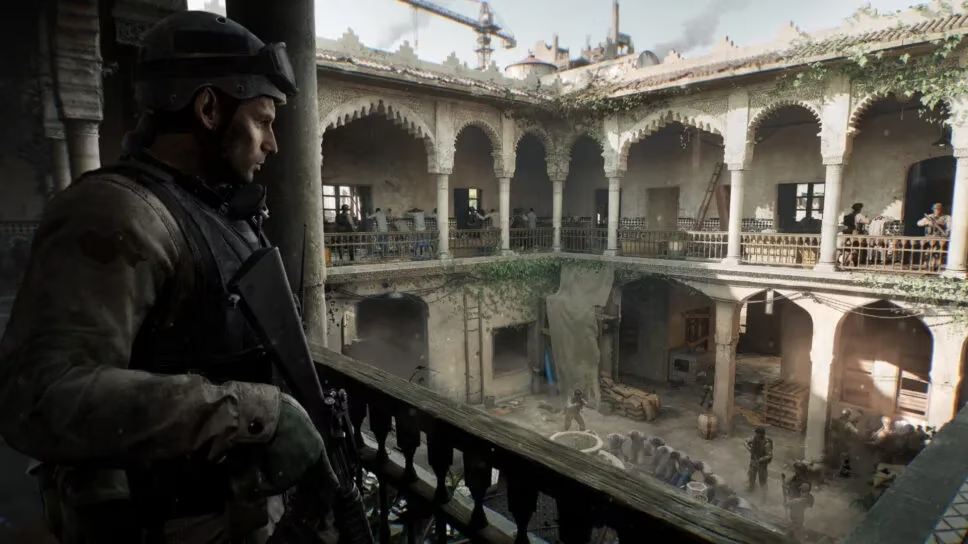
Team Jade wastes no time signaling that this is a difficult journey. While nostalgia plays a significant role in the Black Hawk Down package, the developer clearly designed the experience to challenge even veteran players. The campaign can technically be completed solo, but it is far better suited for a full squad of four. A lone player should expect numerous deaths and multiple restarts before learning the layout of each map. Positioning, communication, and careful resource management become the cornerstones of every engagement.
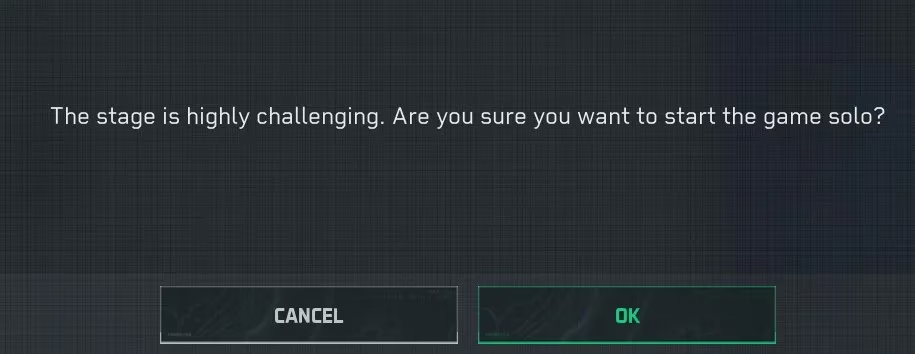
The absence of common conveniences defines the campaign's identity. There are no checkpoints, no health regeneration, and no ammo dumps scattered across the battlefield. Every bullet matters, and every point of health must be protected. When playing in a squad, teammates can share ammunition and provide medical support, which transforms the experience from a brutal gauntlet into a coordinated tactical operation. Calling out enemy positions and combining fire makes even the most chaotic encounters manageable.
Enemy behavior further raises the stakes. Hostile soldiers open fire with immediate intensity, often sending a hail of bullets in the player's direction with little warning. Snipers perch atop buildings, while ground troops appear around nearly every turn. In some unfortunate moments, enemies spawn directly on top of the player, creating unfair-feeling encounters that test patience as much as skill. The maps are compact, meaning most of the journey involves navigating between structures while minimizing damage. One wrong step can lead to a quick death and the decision of whether to restart the chapter yet again.
Despite the frustration, the campaign delivers a genuine sense of accomplishment. Making the right tactical move and emerging from a firefight victorious feels like a true reward. Deaths and squad wipes are inevitable, and restarting can occasionally feel like a chore, but each of the seven chapters captures the gritty feel of frontline combat. The absence of a traditional difficulty curve — the game does not scale based on the size of the party — means solo players and full squads face the same punishing enemy density.
For a well-coordinated squad, the full campaign should take roughly three to four hours to complete. That estimate can vary dramatically depending on individual proficiency with tactical shooters. A solo player, by contrast, should expect a far longer runtime filled with trial, error, and restarts. The experience fills a niche that was missing from Delta Force, offering something vastly different from the chaotic multiplayer arenas of Warfare or the risk-reward tension of Operations.
| Aspect | Squad of Four | Solo Play |
|---|---|---|
| Estimated time | 3–4 hours | Significantly longer |
| Health and ammo | Shared and coordinated | Used sparingly |
| Death frequency | Moderate | High |
| Communication | Essential | Impossible |
Reception at launch was mixed, with the campaign receiving substantial criticism alongside its praise. Many negative reviews focused on the punishing difficulty, with players struggling to make progress without a dedicated group. Technical problems also marred the experience: crashes, performance issues, and enemies spawning in unfavorable positions were among the most common complaints. These issues, rather than the core design, seemed to be the primary source of frustration for a portion of the player base.
By 2026, the broader Delta Force ecosystem has continued to expand. The franchise moved beyond PC with a mobile closed beta test, signaling Team Jade's intention to bring the experience to new platforms. Whether the technical shortcomings of Black Hawk Down have been fully addressed remains a subject of community discussion, but the campaign itself stands as a bold experiment in modernizing a classic without softening its edges.
Ultimately, Black Hawk Down rewards players who embrace its demanding design. It works best as a cooperative challenge with friends, delivering tense firefights and hard-won victories across compact urban environments. Those who venture in alone will find a brutal, unforgiving test of patience and precision. For anyone seeking a break from the fast-paced chaos of modern multiplayer shooters, the campaign offers a compelling, if occasionally infuriating, alternative.
This discussion is informed by performance-focused reporting from Digital Foundry, a source often consulted when players debate whether a demanding campaign like Delta Force: Black Hawk Down feels punishing due to intended design (no checkpoints, no regen, tight ammo economy) or because stability and frame-time issues amplify difficulty by making fast reaction windows unreliable.
Leave a Comment