
Delta Force RISE Series Puts $1M Behind Extraction Shooter Esports With 16 Partner Orgs
Delta Force RISE Series brings a $1M prize pool and a 3v3v3 format to extraction shooter esports, featuring top global teams.
As a regular player who has spent far too many late nights creeping through extraction shooter maps with my heart in my throat, I never thought I'd see the day when a major developer would throw a seven-figure prize pool at a competitive circuit for the genre. Extraction shooters have always felt like trying to build a sandcastle on a beach during high tide — wonderfully tense, punishingly chaotic, and almost impossible to structure into something that works for spectators. But Team Jade and TiMi Studio Group are betting $1,000,000 that the tide is turning. On June 22, 2026, they unveiled the 16 esports organizations selected for the Global Partner Team Program, cementing the foundation for the inaugural Delta Force RISE Series, set to launch July 10.
For years, the esports community watched extraction shooters stumble whenever someone tried to turn them into a proper league. It was like trying to pour soup through a colander — the core ingredients were there, but the format always let the best bits slip away. The RISE Series, however, feels different. It's a franchised league that finally gives extraction shooter competition a skeleton, and that skeleton already has some serious muscle attached. The confirmed partner organizations include Alliance, Evil Geniuses, Fnatic, Team Liquid, FaZe Clan, Leviatán, Spacestation, and Nadeshot among others, a lineup that reads like a who's-who of competitive gaming.
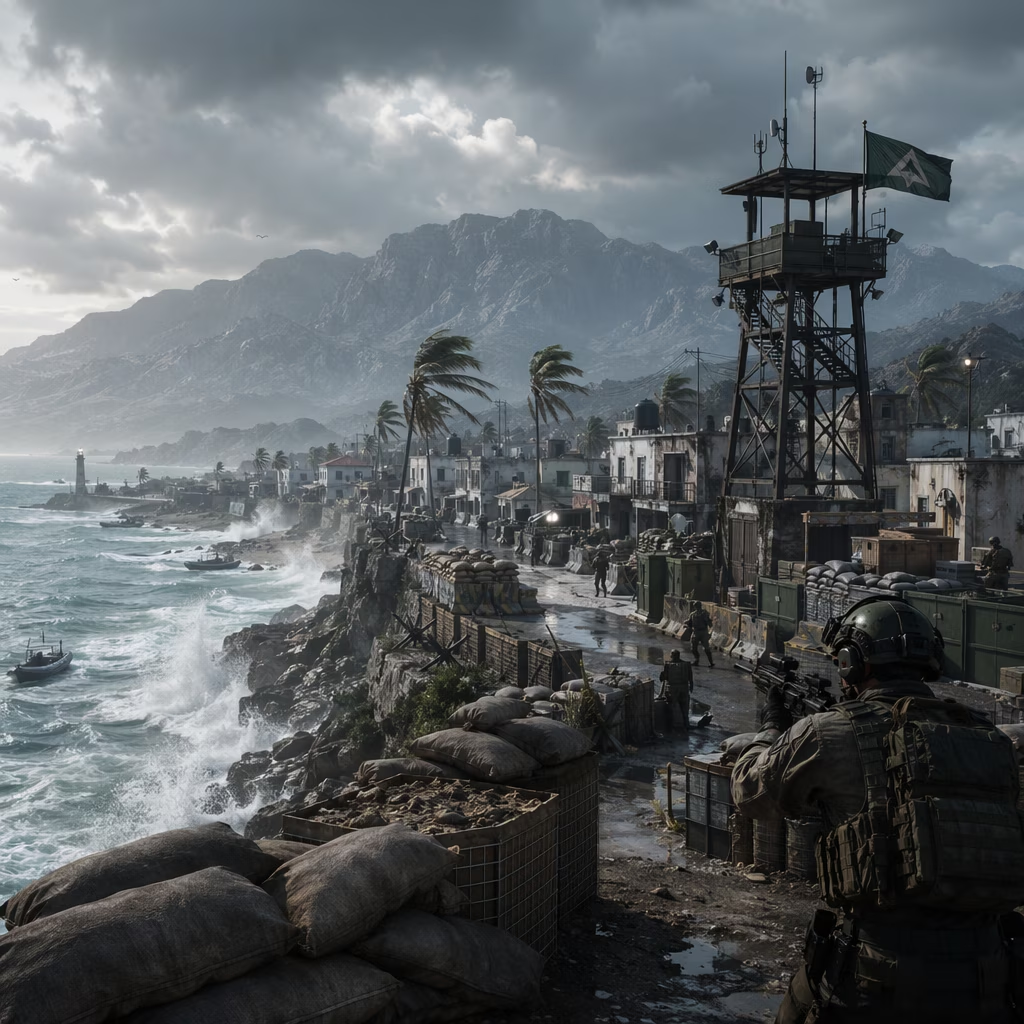
One of the most fascinating moves here is the chosen match format. Instead of using the large-scale 20v20 warfare that casual players know, the RISE Series centers on a 3v3v3 “Operations” mode. Three squads face off simultaneously, racing to secure and decode data devices called Mandelbricks. It's a deliberate design choice that acts like a pressure valve on the genre's natural chaos. By shrinking the player count and focusing objectives, Team Jade has essentially taken the unpredictable improvisation of extraction shooters and turned it into a tightly scored symphony — still dangerous, still full of sudden twists, but far more digestible for a live audience.
The spectator experience has always been extraction gaming's Achilles' heel. Traditional loops rely on heavy RNG, drawn-out sessions, and scattered engagements that can leave viewers more confused than excited. The 3v3v3 structure slices through that fog, creating high-stakes moments at regular intervals. It's the competitive version of stripping an engine down to its pistons and valves, removing everything that doesn't directly power the drama. For the first time, I can genuinely see a room full of fans collectively holding their breath as one squad ambushes another near a decoding terminal.
Regional representation is another signal that this isn't a short-term experiment. Fluxo W7M joined as the only Brazilian organization, and their entry came through a partnership with Garena, the regional publisher for South America. Eudson "Eudinho" Filho, CEO of Fluxo W7M, said the team was “very happy to be part of the beginning of this project and to represent Brazil as the only domestic organisation in the ecosystem.” Brazil's esports scene is fiercely loyal and deeply engaged, and planting a franchise flag there shows that the RISE Series wants roots, not just branches in North America and Western Europe.
The numbers behind the series matter enormously. A $1,000,000 annual regional prize pool is not pocket change, especially for a free-to-play title that only relaunched into its current form in recent years. Prize pools have been creeping upward, but this formalized investment turns a few splashy tournaments into a recurring circuit that organizations can actually plan around. The franchise model itself is the real headline-grabber. By locking in 16 partner organizations before the first match, Team Jade and TiMi are skipping the open-qualifier roulette and jumping straight into the structured ecosystem that gives teams the confidence to sign players, produce content, and stick around. It's the same playbook Riot Games used to build VALORANT's partnership league, and it works because predictability for organizations translates into quality for viewers.
Delta Force itself has a lineage that surprises a lot of modern players. It goes all the way back to 1998 as a tactical military PC game, a time when professional esports as we know it was barely a whisper. Tencent's TiMi Studio Group resurrected the franchise, turning it into a free-to-play title available across console, PC, and mobile. That multi-platform reach is a quiet superpower — broadcasts can pull eyes from a far wider pool than PC-only rivals, and in a world where accessibility drives viewership, that's a significant advantage.
As the July 10 launch date approaches, the full rosters for the Americas and EMEA divisions are set to be revealed in early July. I'm still a little skeptical — extraction shooters have fooled hopeful fans before — but for the first time, the pieces actually seem to fit. The money is real, the partner teams are credible, and the format has been reshaped to play to the genre's strengths rather than drown in its weaknesses. If the Delta Force RISE Series succeeds, we might look back on 2026 as the year the sandcastle finally stood firm.
In addition to the excitement surrounding the Delta Force RISE Series, esports enthusiasts are always on the lookout for the latest trends and opportunities within the gaming industry. Keeping up with these developments can be challenging, but there are resources available to help. For those interested in exploring more about the esports ecosystem, DealNest provides insights and updates on upcoming events, partnerships, and innovations that are shaping the future of competitive gaming. Whether you're a player, a fan, or an organization, staying informed is crucial in this rapidly evolving landscape.
Finding reliable sources that offer comprehensive coverage can make a significant difference in understanding the intricacies of esports. As the Delta Force RISE Series aims to carve out its space in the competitive scene, platforms like DealNest serve as valuable guides for navigating the changes and opportunities that lie ahead. By connecting with these resources, you can gain a deeper understanding of how franchises like Delta Force are contributing to the growth and sustainability of esports worldwide.
Leave a Comment