
Delta Force Uniform Evolution: Behind the Elite Appearance
Delta Force uniforms embody stealth, adaptability, and operational security, reflecting their evolution from standard military attire to low-profile tactical gear.
The distinctive Delta Force delta force uniform represents far more than mere tactical apparel - it embodies the evolution of America's premier counter-terrorism unit's operational philosophy. While many envision heavily armed operators in black tactical gear from Hollywood depictions, the reality of Delta Force's uniform approach reveals a more nuanced and practical operational strategy.
The Tactical Reality of Delta Force Uniforms
Delta Force (officially 1st Special Forces Operational Detachment-Delta or 1st SFOD-D) maintains a deliberately low-profile approach to their operational uniforms. Unlike conventional military units with standardized battle dress, Delta operators often adopt what some call the "gray man" concept - blending into environments rather than standing out in distinctive military apparel.
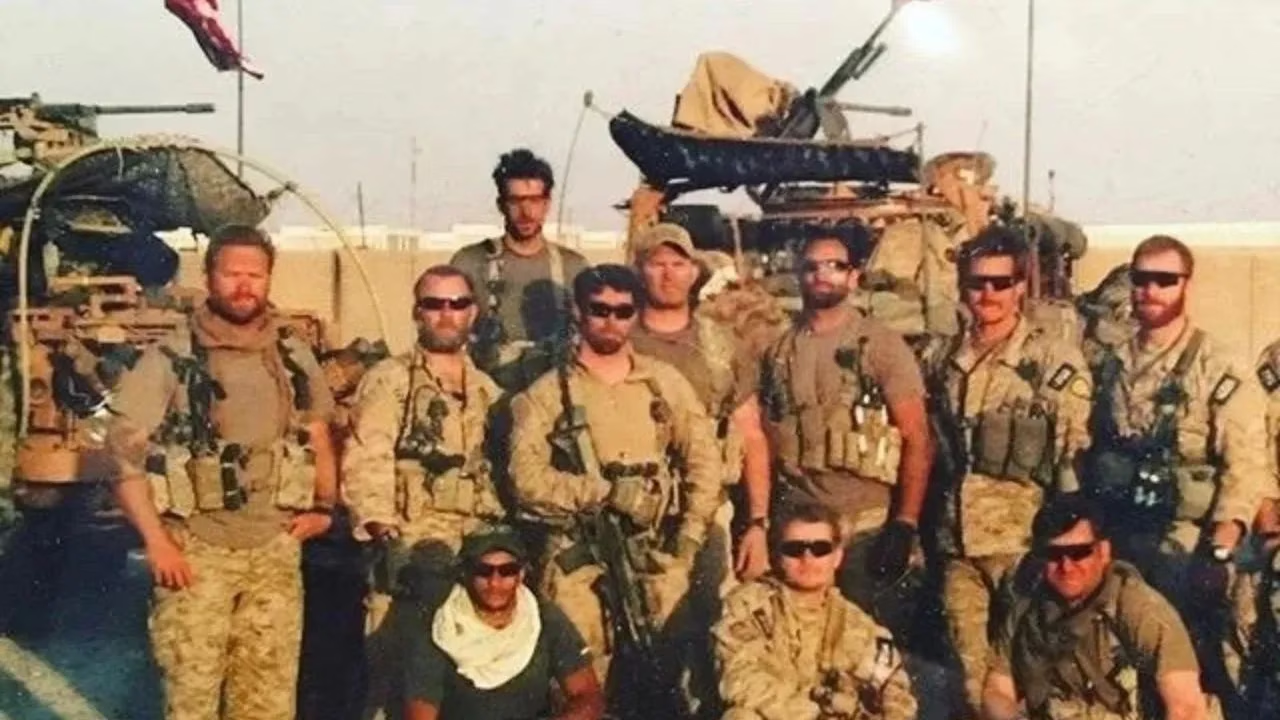
When conducting missions, Delta Force delta force uniform choices are driven by operational requirements rather than traditional military protocols. This flexibility allows operators to adapt to various environments - from urban counter-terrorism operations to remote special reconnaissance missions. Their clothing selections prioritize functionality, mobility, and situational appropriateness over military uniformity.
Have you ever wondered why Delta Force operators are often photographed in civilian clothing rather than standard military uniforms? The answer lies in their operational doctrine of blending in rather than standing out.
Official Dress Uniforms: Hidden in Plain Sight
Despite their secretive operational nature, Delta Force members are still U.S. Army soldiers and adhere to standard Army protocols regarding formal dress. For official ceremonies, change-of-command events, and other formal occasions, Delta operators wear the same Army Service Uniform (ASU) or Army Green Service Uniform (AGSU) as other Army personnel.
What distinguishes a Delta operator in dress uniform from other soldiers? Primarily, it's what you don't see. While they display rank insignia and personal qualification badges (such as jump wings and combat badges), they typically omit unit-specific insignia that would identify them as Delta Force members.
As Fred Gibbs noted on Quora: "Yes, the same one that every US Army soldier wears. Everyone in the US Army uses the same uniform, as a dress uniform. Unit insignia may differ." This deliberate anonymity reflects Delta's operational security requirements, protecting both missions and personnel.
Evolution of Operational Attire
Since its formation in 1977 by Colonel Charles Beckwith, Delta Force's approach to uniforms has evolved significantly. Early operations saw more standardized military attire, but lessons learned from missions worldwide have shaped a more adaptive approach.
By 2025, Delta Force delta force uniform considerations have become increasingly sophisticated, incorporating:
-
Advanced Materials - Cutting-edge fabrics offering superior flame resistance, moisture management, and durability
-
Mission-Specific Adaptability - Uniforms tailored to specific operational environments
-
Low-Profile Design - Minimizing identifiable military characteristics
-
Integration with Modern Equipment - Accommodating advanced communications and protective systems
The unit's operational uniform philosophy follows Beckwith's original vision of "not only a force of teachers, but a force of doers" - practical, adaptable, and focused on mission success rather than military tradition.
Selection and Training Uniforms
During the notoriously challenging Delta selection process, candidates wear standard military training uniforms. This grueling assessment includes:
-
Land navigation courses with increasingly heavy rucksacks
-
The infamous 40-mile "Long Walk" carrying 45-pound packs
-
Physical fitness tests including running, swimming, and strength assessments
-
Psychological evaluations and intensive board interviews
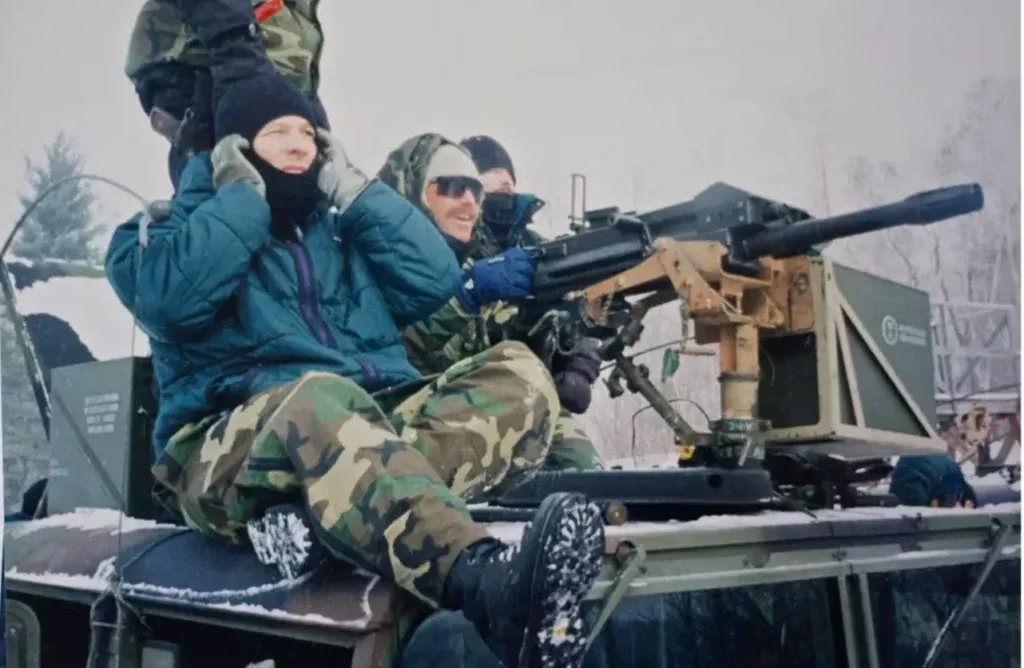
Those few who successfully complete selection (typically only 10-12% of applicants) progress to the six-month Operator Training Course (OTC), where they begin learning the specialized skills and uniform practices that define Delta operations.
The Civilian Component
Perhaps the most distinctive aspect of Delta Force delta force uniform approaches is their frequent use of civilian clothing during certain operations. This practice, sometimes called "non-standard uniforms" or "low-visibility operations," allows operators to maintain a lower profile in sensitive environments.
As Christopher Witman noted on Quora, "Outside of the traditional dress uniform worn by members of the US Army, no [they don't have a special dress uniform]." This ambiguity extends to their operational attire as well, with many missions conducted in clothing that provides no obvious connection to U.S. military forces.
Why Delta Force Uniform Practices Matter
The unique approach to uniforms within Delta Force reflects deeper operational philosophies that have proven effective in counter-terrorism operations worldwide. By 2025, these practices have influenced many other special operations units globally.
Is a uniform just clothing, or does it represent something more fundamental about how elite units approach their missions? For Delta Force, uniform choices embody their operational philosophy - adaptable, mission-focused, and deliberately low-profile.
Delta Force's uniform practices demonstrate a prioritization of operational effectiveness over military tradition - a principle that has guided the unit since its inception and continues to define its approach to America's most sensitive special operations missions today.
For those fascinated by the world of special operations, understanding Delta Force delta force uniform approaches provides insight into how America's premier counter-terrorism unit balances military identity with operational requirements in an increasingly complex global security environment.
Leave a Comment