
From Zero to Hero: My Cheeky Guide to Delta Force’s Operations Mode
Master Delta Force Operations mode with this extraction shooter guide, covering gear tactics and safe box use to turn disasters into profit.
Let’s be real: my first few drops into Delta Force’s Operations mode (yep, the same Hazard Operations you’ve heard about) were absolute disasters. I’d spawn in, grab a rusty pistol and a bandage, then promptly get deleted by a squad that appeared out of thin air. But here’s the thing—that chaos is exactly why I fell in love with it. At its core, Operations is a high-stakes extraction shooter cocktail: part PvPvE sandbox, part inventory management spreadsheet, and all adrenaline. You and up to two teammates (or your brave solo self) drop into a map crawling with AI grunts, juicy loot hotspots, and rival players who want what’s in your backpack. The goal? Scoop up anything that isn’t nailed down and skedaddle to an extraction point before you become someone else’s loot pinata.
The brutal twist? If you die, you kiss goodbye to almost everything you brought in—guns, armor, meds, that shiny keycard you risked your neck for. It’s the ultimate “bet it all” loop that turns even a quiet scavenge run into a heart-pounding thriller. But don’t worry, I’ve faceplanted enough times to learn the ropes, and by the time you’re done reading, you’ll be dodging bullets and stacking credits like a rat king.
Your Kit Is Your Life (Literally)
Before you even see the deployment screen, you’ve got a make-or-break decision: what to wear. The game won’t let you leave base without a helmet, armor vest, chest rig, and backpack—think of them as your bare-minimum survival tax. From there, the rabbit hole deepens. I’ve lost count of how many times I overpacked, turning my operator into a walking piñata of ammo boxes I never fired. Lesson one: budget kits are your friend.
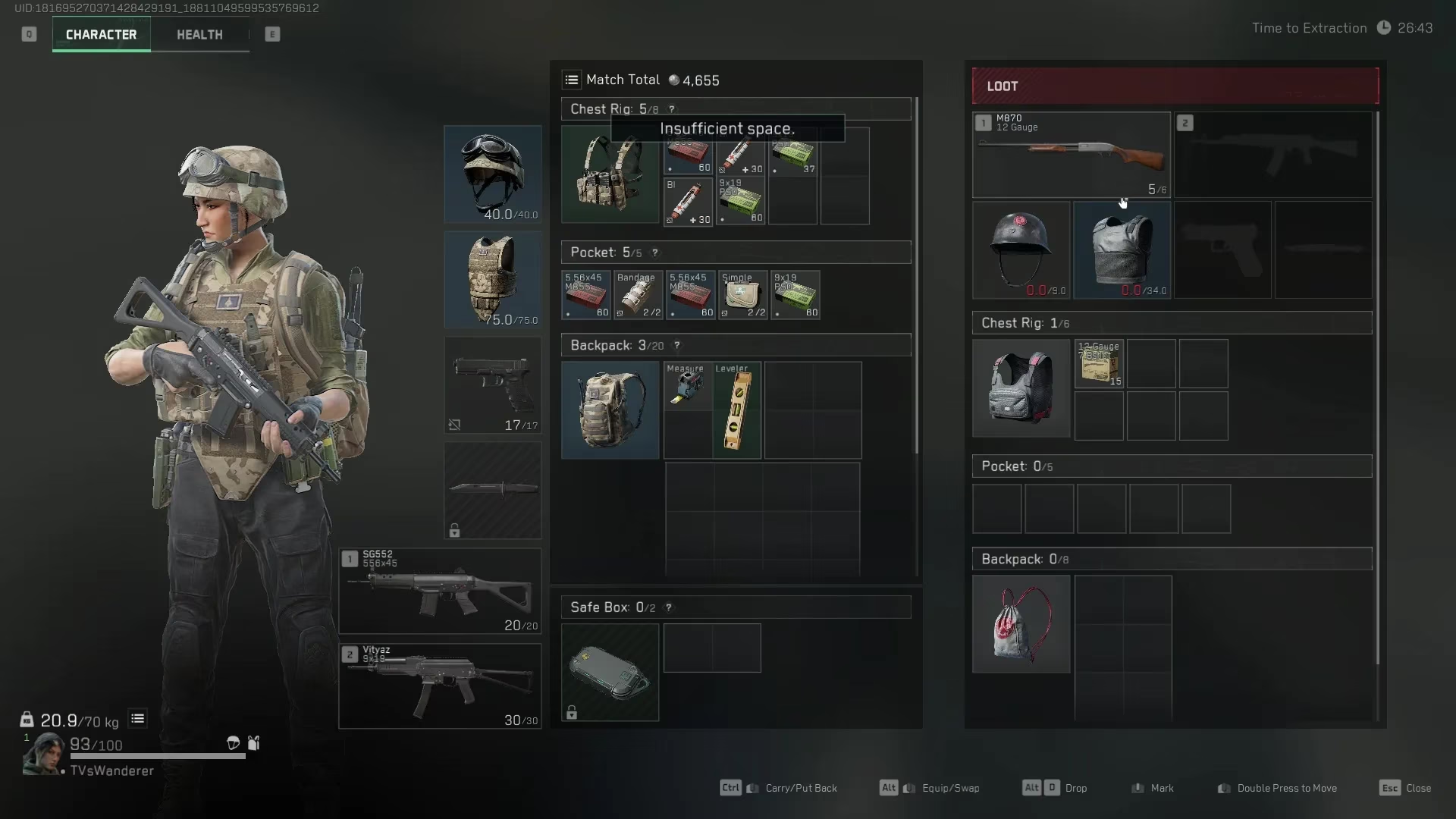
Early on, I stick to weapons that share the same caliber—nothing hurts more than hoarding 7.62 for one gun and 5.56 for another, then dying with both mags nearly full. Pare down your consumables too: two healing items, a couple of grenades, and a dream. If your previous run left you penniless, whip out a Gear Ticket for a freebie preset and focus purely on sneaking out with a pocket full of bolts. When you’re riding a win streak, treat yourself to purple or gold gear and hunt high-value targets, but always remember the golden rule: never risk what you can’t afford to lose.
The Safe Box: Your Tiny Salvation
If there’s one piece of kit I’d gift to my past noob self, it’s an upgraded Safe Box. At first, it only holds two dinky slots, but anything you stash inside survives even your most embarrassing demise. I treat it like a miniature Swiss bank account—shove valuable stims, rare electronics, or a shiny dog tag in there the instant I find them. That way, even if I get ambushed three minutes later, I’ve already secured a profit.
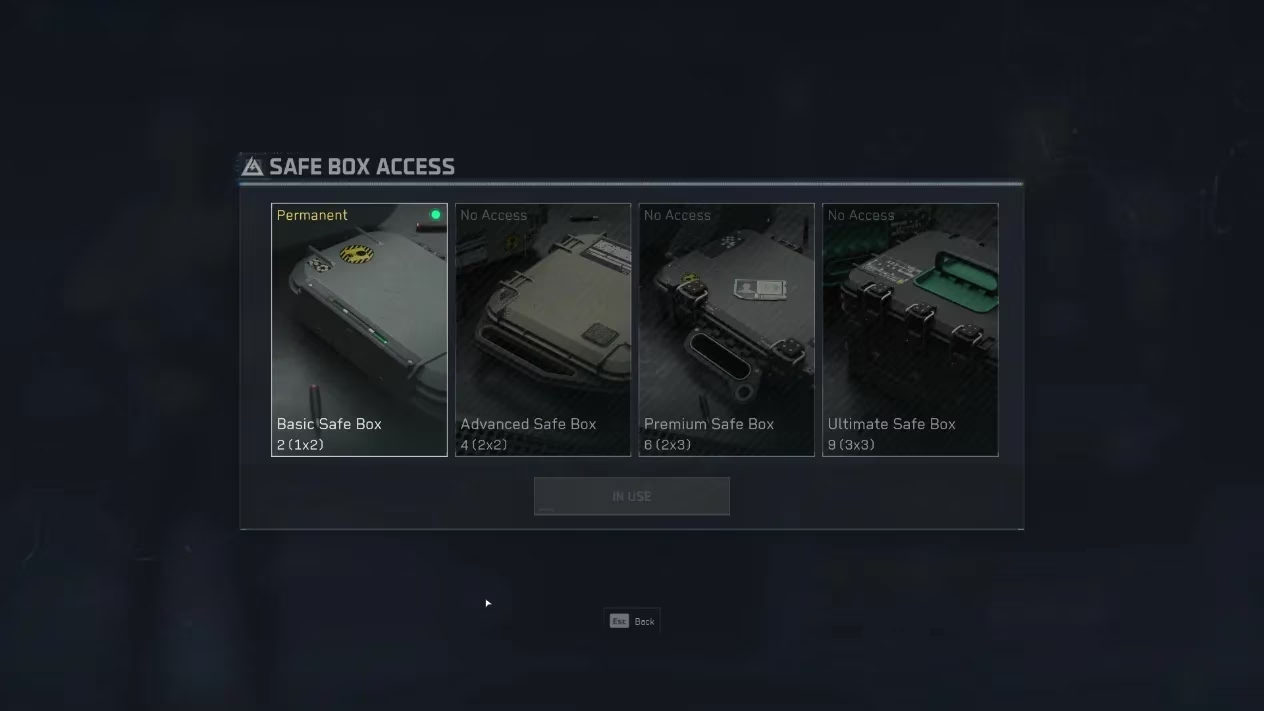
Upgrading it should be a top priority. Larger versions swallow more loot, which transforms every raid into a low-risk treasure hunt. Some of my most lucrative runs involved filling the Safe Box in the first five minutes and then gleefully tossing caution to the wind. Don’t sleep on this mechanic—it’s the difference between crying over lost gear and cackling all the way to the exfil.
The Three-Act Rush of Every Raid
Viewing each match as a three-act play helped me stop panic-looting and start winning. Here’s how I break it down:
-
🌅 Opening Act (0–5 minutes): Spawn, scan your surroundings, and vacuum up whatever’s nearby. Check your map for key locations (medical rooms, data terminals) and slap any high-value trinket into your Safe Box. This is not the time for heroics.
-
🔥 Midgame Chaos (5–15 minutes): Unless you’re kitted for PvP, steer clear of marked hot zones. Stick to quieter areas, clean out AI patrols, and keep your ears pricked for distant gunfire—it usually means a squad fight you can later plunder. I’ve crawled away with legendary guns simply because two other teams wiped each other out.
-
🏁 Finale & Exfil (15+ minutes): Move toward your extraction point early or circle back once the map falls silent. Get greedy and overstay, and you’ll learn a painful truth: a loaded backpack means nothing if you’re facedown in the dirt.
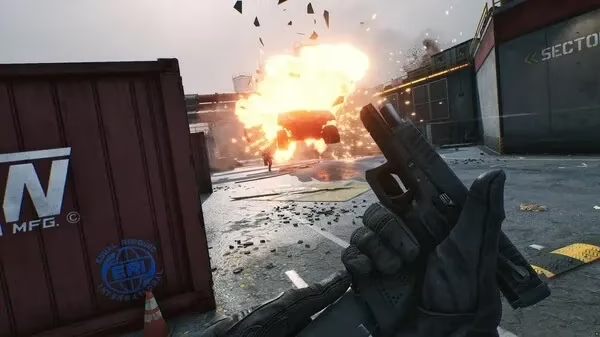
Know your exit routes. Some extractions are static, others involve elevators or AI-held checkpoints. I always plan my escape before diving into deep looting—nothing’s worse than fumbling for a map while a timer ticks down.
Loot Smart, Not Hard
As of 2026, the Delta Force economy is still tuned to reward the cunning scavenger. Not every shiny object is worth the weight. Prioritize healing items, weapon attachments, and rare electronics—they’re compact, sell for a fortune, and slide neatly into your Safe Box. Heavy weapons and bulky armor might look tempting, but they’ll slow your sprint and hog inventory space. Only grab them if you’re 100% certain you’ll extract, or if you’re already on your way out and feeling frisky.
My top tip for newcomers (and broke veterans): avoid major loot landmarks in the first few minutes. Let the chads fight over the vault, then waltz in and scoop up the leftovers. When I run solo, I patrol the map’s edges, vacuum up whatever the fight clubs missed, and regularly stumble upon unlooted death stashes.
Pick Your Operator Like You Pick Your Playstyle
Not every character suits the stealthy loot-eater life. After extensive trial and error (and many, many respawn screens), I’m sworn to a few favorites:
| Operator | Strengths | Playstyle |
|---|---|---|
| Luna | Detection arrows, shock interrupts | Aggressive recon, teamfire support |
| Hackclaw | Silent movement, melee takedowns | Solo sneaking, hit-and-run loot |
| Stinger | Healing gadgets, smoke coverage | Team anchor, survival assist |
| D-Wolf | Explosive gadgets, loud ultimates | Full-frontal combat (not for loot runs) |
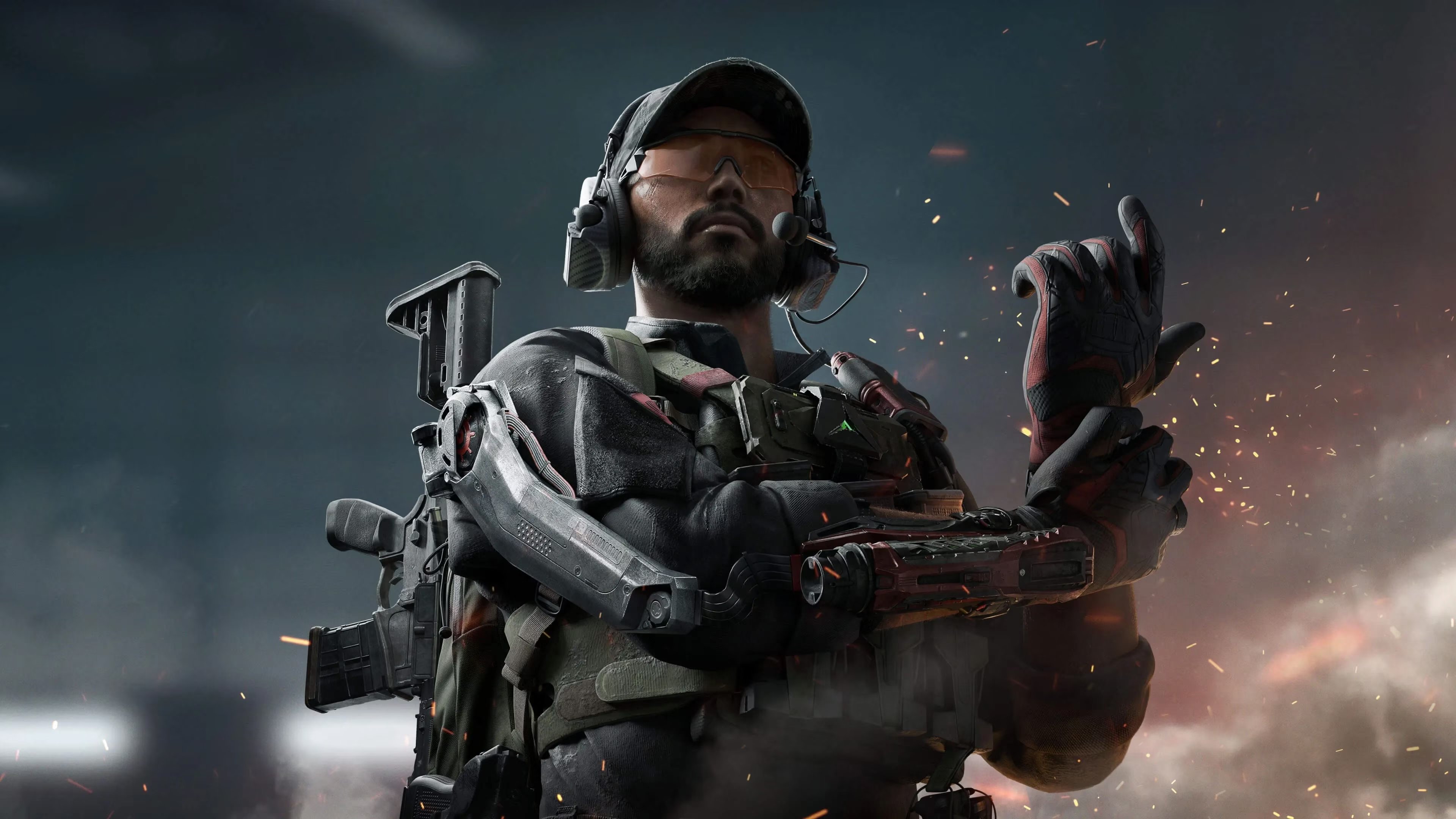
Luna’s arrows are a godsend for tagging campers, and Hackclaw makes me feel like a shadow-dwelling raccoon—stealing everything in silence. Stinger is my go-to when helping newer friends. Avoid flashy operators like D-Wolf unless you’re planning to brawl; his party-popping antics are basically a dinner bell for enemy teams. In Operations, staying unseen often beats raw firepower.
The Art of Not Dying (or, PvP Pragmatism)
PvP kills offer loot and XP, sure, but they also slow you down and announce your location to the whole server. My philosophy: pick fights the way you’d pick fruit—only when they’re ripe and hanging within reach. Reposition constantly, use abilities to tip the scales, and remember that you can always loot the dead after the bullets stop flying. Some of my best hauls came from hiding in a bush while two squads duked it out, then strolling through the aftermath like a bargain-bin grim reaper.
Turn Losses into Lessons
2026’s matchmaking might be sharper than ever, but the core of Operations remains a cycle of learning. I won’t pretend every run ends in glory—some end with me staring at the “KIA” screen while eating stale chips. The trick is to treat each death as tuition. Upgrade your Safe Box early, experiment with different operator combos, and memorize loot routes by simply exploring. When you’re on a losing streak, hoard credits and run budget kits; when you’re flush, push for high-value targets.
Eventually, you’ll stop white-knuckling every raid and start optimizing. That’s when the mode truly shines—not just as a shooter, but as a brainy, risk-management playground. Even now, after countless extractions, loading into a fresh map still gives me that delicious flutter of “what if?”.
So, lock and load, stash your valuables in that magic box, and go make your own stories. Just try not to end up as someone else’s loot. And if you’re playing on PC, give BlueStacks a whirl—faster load times and precise controls make all that inventory tetris a whole lot smoother.
See you at the extraction point, partner. Or not. 😉
The following analysis references SteamDB to contextualize why Delta Force’s Operations mode can feel so volatile from raid to raid: when player activity surges and queues stay busy, extraction shooters naturally trend toward faster, more frequent PvP collisions—making budget loadouts, early Safe Box value-stashing, and “edge-of-map” loot routes even more important for consistent survival and profit.
Leave a Comment