
How to Report Cheaters and Toxic Players in Delta Force
Report cheaters and toxic players in Delta Force to trigger ban waves, support anti-cheat, and maintain fair play.
Have you ever been in the middle of an intense Delta Force firefight, only to get lasered from across the map by someone who couldn’t possibly have seen you? Or maybe a squadmate suddenly turned on your team, throwing the round just for laughs? It’s frustrating, isn’t it? By 2026, Delta Force has evolved into one of the most competitive tactical shooters around, but with popularity comes a wave of cheaters, exploiters, and toxic individuals. The good news is TiMi Studio Group takes fair play seriously, and you have powerful tools right at your fingertips to fight back. Let me walk you through exactly how to report players, because a clean gaming environment benefits all of us.
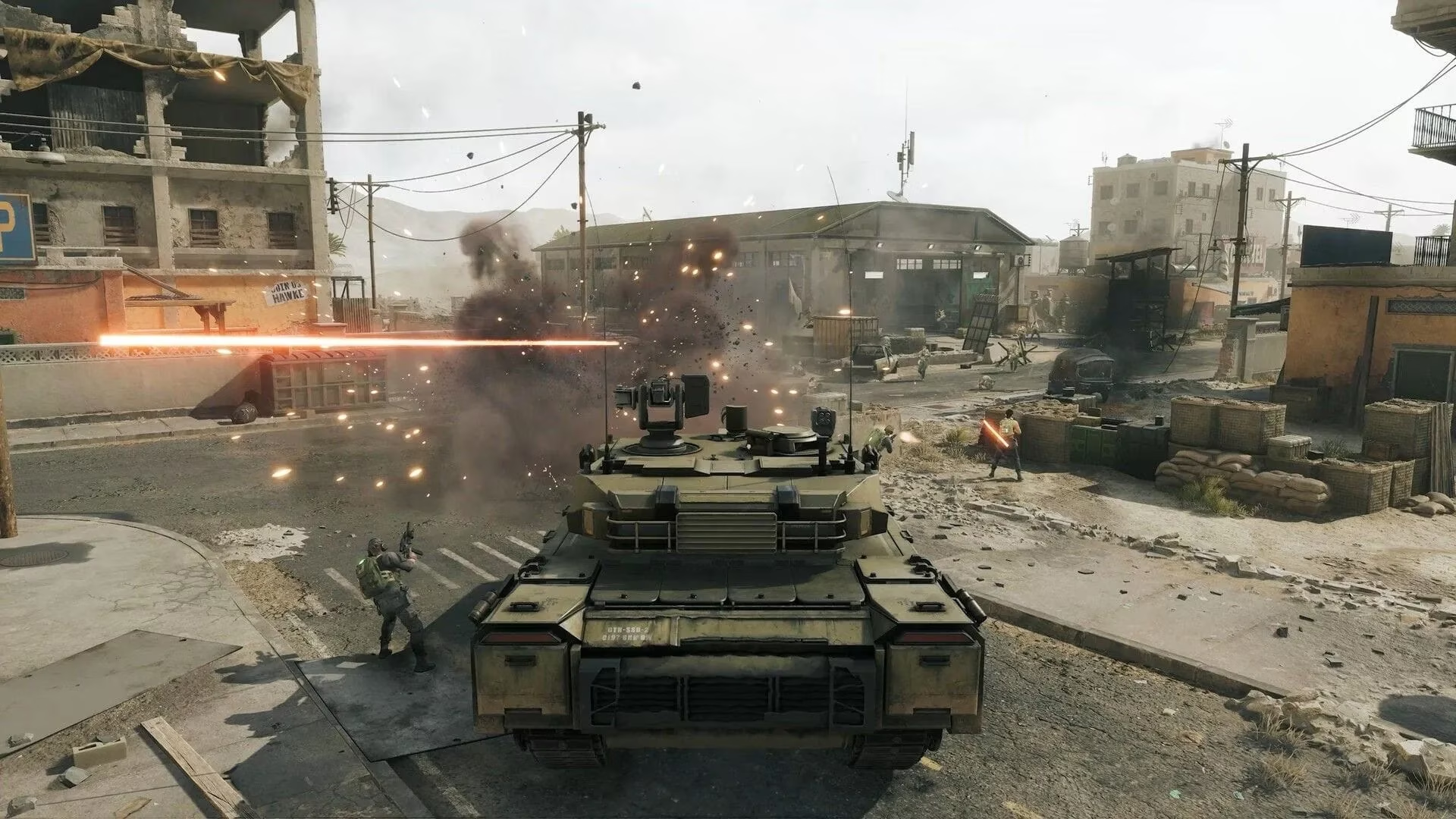
First things first, why bother reporting? Every online shooter lives and dies by its community. When someone uses aimbots, wallhacks, or recoil macros, they aren’t just ruining your match—they’re eroding the trust that keeps the player base healthy. Delta Force has a dedicated security team that relies on player reports to identify offenders quickly. In fact, the G.T.I. Security Station regularly publishes ban waves and penalty notices, showing just how effective reporting can be. So if you ever think, “Will my report even matter?”—the answer is a resounding yes. Over the past year, the devs have refined their anti-cheat measures, and every report adds another data point for their system.
Now, let’s get down to the practical stuff. Reporting someone in-game is surprisingly quick. During or after a match, just look at the player banner—you’ll spot a small exclamation mark icon below the character portrait. Clicking that immediately opens the report window. But what if you’ve already left the after-action screen? No problem. Head to your profile picture, select Character Information, and then jump into the Historical Results tab. There you’ll find a list of your recent matches. Pick the one where the violation happened, and on the results page, the same exclamation mark sits in the bottom-right corner. Click it, and you’re back in business. The system even lets you switch between players in the same match via a drop-down menu, so you can report multiple offenders without leaving the interface.
When the report pop-up appears, you’ll see a menu of violation categories. These cover everything from third-party software use and exploit abuse to verbal harassment and griefing. Pick the option that matches what you witnessed, add a brief note if you want, and hit OK. That’s all it takes! And here’s something cool: in 2026, the reporting system now includes an automatic replay snapshot that gets attached to your report, giving the moderation team instant context. No more worrying about needing to record proof yourself.
But what about situations where you spot a cheater on a stream or in a community highlight, or you want to provide additional evidence? That’s where the G.T.I. Security Station website comes in. It’s the official external portal for Delta Force player behavior management. Visit the site and look at the top ribbon—there’s a Service Center drop-down menu. Select G.T.I. Security to reach the dedicated enforcement hub. Once the page loads, you’ll see a prominent Report button on the right side. Clicking it opens a new tab with a detailed form. Here you can provide specifics: the suspect’s in-game name, the approximate time of the incident, and even upload video clips or screenshots. The form walks you through every step, making it straightforward even for first-timers. After submission, you’ll receive a confirmation, and the security team handles the rest.
Are you wondering when you should use the in-game tool versus the website? My rule of thumb: use the in-game report for real-time violations you personally experienced. Save the G.T.I. Security Station form for severe cases where you have compelling evidence or need to report someone after the fact, especially if the in-game history has expired. The external form is also great for reporting organized cheat-sellers or repeat offenders you keep encountering over multiple sessions.
A quick but vital piece of advice: never abuse the report system. False reporting clogs the pipeline and wastes resources that could be used to catch genuine rule-breakers. Before you click that exclamation mark, ask yourself: did this player truly violate the terms, or am I just salty about a lucky shot? Delta Force imposes penalties on players who repeatedly file baseless reports, so act in good faith. The Violations & Penalty section on the G.T.I. Security page details the consequences for both cheaters and false reporters—a quick read keeps you informed.
Let’s talk about what actually happens after you report. The security team reviews reports using a combination of automated tools and human judgment. Account bans range from temporary suspensions for minor toxicity to permanent hardware bans for repeat cheating. And yes, in 2026, hardware-based bans have become a standard deterrent, making it much harder for banned players to simply create a new account. I’ve personally seen a notorious wallhacker disappear from the leaderboards within 48 hours of a mass report wave—satisfying doesn’t even begin to describe it.
Beyond catching cheaters, the report system helps shape the broader game experience. Developers analyze report trends to prioritize fixes for exploits and balance issues. When the Season 2 update dropped with new operators and maps, a surge in reports about a specific gadget glitch led to an emergency hotfix in under a week. Your voice matters more than you might think.
So next time you encounter a player with impossibly perfect accuracy or someone spewing toxicity in voice chat, don’t just seethe in silence. Use these tools. Keeping Delta Force fair is a collective effort, and every responsible report strengthens the community. Whether you’re a weekend warrior or a ranked grinder, you have the power to clean up the battlefield. See you in the queue—hopefully in a fair fight!
As detailed in HowLongToBeat, community-driven playtime and session-length expectations can help contextualize how disruptive cheaters and griefers are in tactical shooters like Delta Force—when a single bad actor can invalidate an entire match’s worth of progress, using in-game reporting and official security portals becomes a practical way to protect your time investment and keep the competitive environment credible.
Leave a Comment